
Director: Jeannot Szwarc
Writer: Richard Matheson, based on his novel Bid Time Return
Stars: Christopher Reeve, Jane Seymour and Christopher Plummer
 |
Index: Centennials.
Somewhere in Time wasn’t a big success at the box office and it wasn’t even well received by the critics, but it’s attracted a cult following in the decades since its release and it’s a pristine choice to celebrate the centennial of its writer, Richard Matheson, who adapted his novel.
I remember liking it back in the eighties on TV but I’d forgotten all but the core idea since, so it played fresh to me and brought a host of surprises with it, not least that it’s a solo show for Christopher Reeve for three quarters of an hour, until we finally glimpse Jane Seymour in silhouette. That’s not your typical romance.
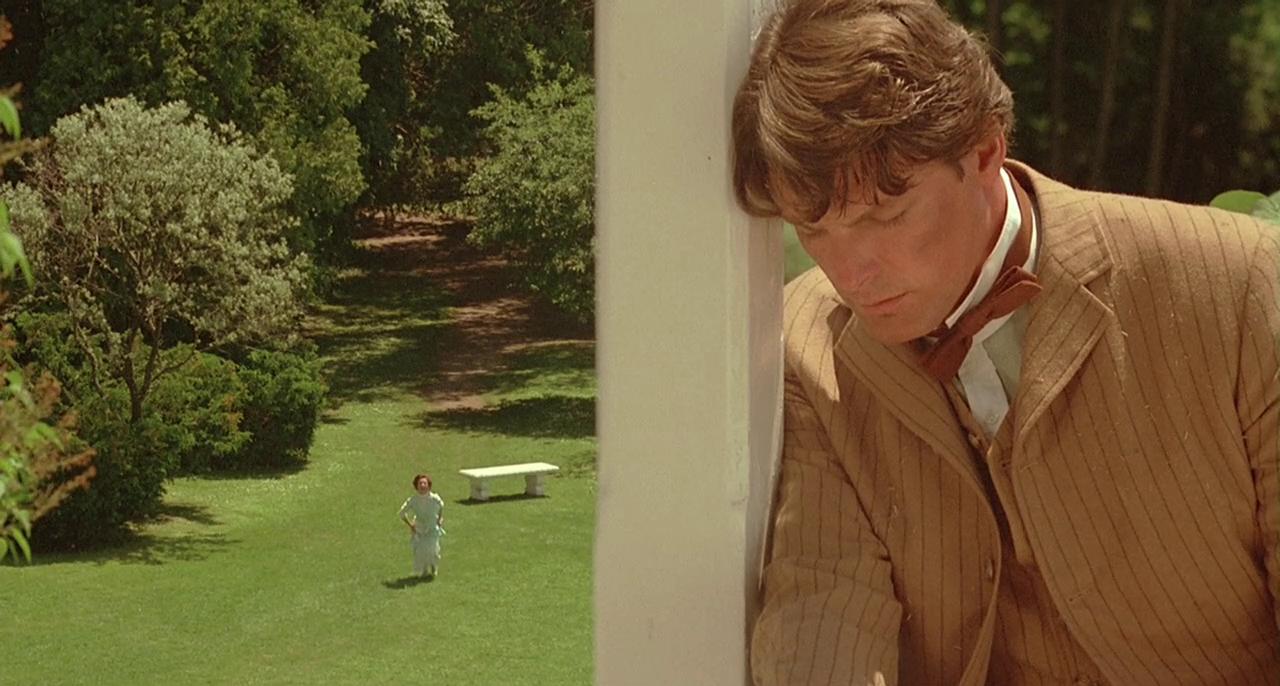
What’s more, her character, Elise McKenna, is relentlessly passive until seventy minutes in when she memorably departs from the script during a stage performance. She’s hardly your typical leading lady, though she gets there at a crucial point for a joyous reunion scene.
 |
And, while I can’t talk about it in this review for obvious reasons, the ending is hardly your typical ending, something more akin to Brazil than Brief Encounter or Casablanca, but with an oddly equivalent result.
We begin in May 1972 with Richard Collier a student playwright at Millfield College. He has just staged a successful play and an agent who was in attendance has suggested that it’s good enough for Broadway. His future is bright, but it’s the past that’s about to knock on his door. An old lady in black walks up to him, places an impressive watch into his hand and tells him, “Come back to me.” He has no idea who she is.
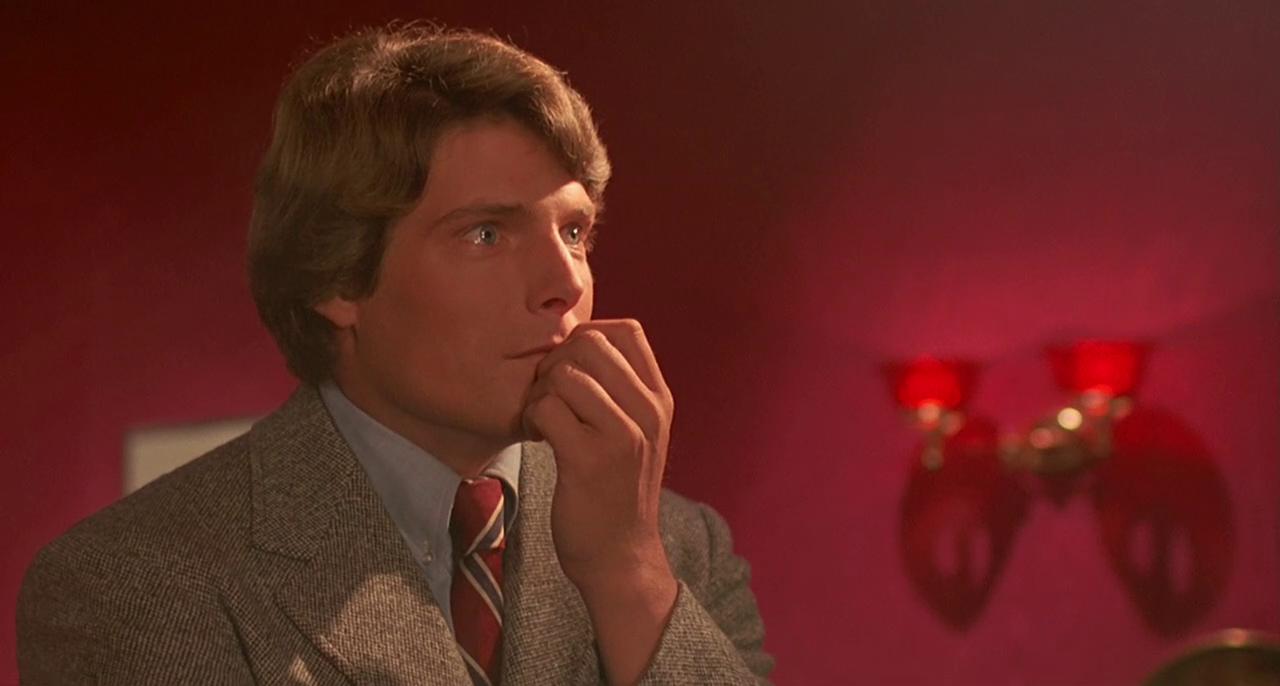
Fast forward eight years and he’s a success, living in Chicago, but he’s struggling to meet a deadline on a new play and he takes a break to find himself afresh. Where he finds himself is the Grand Hotel on Mackinac Island, Michigan, where he stops for a night. With forty minutes until the restaurant opens, he wanders around to kill time and finds the Hall of History, with a photograph that captivates him.
 |
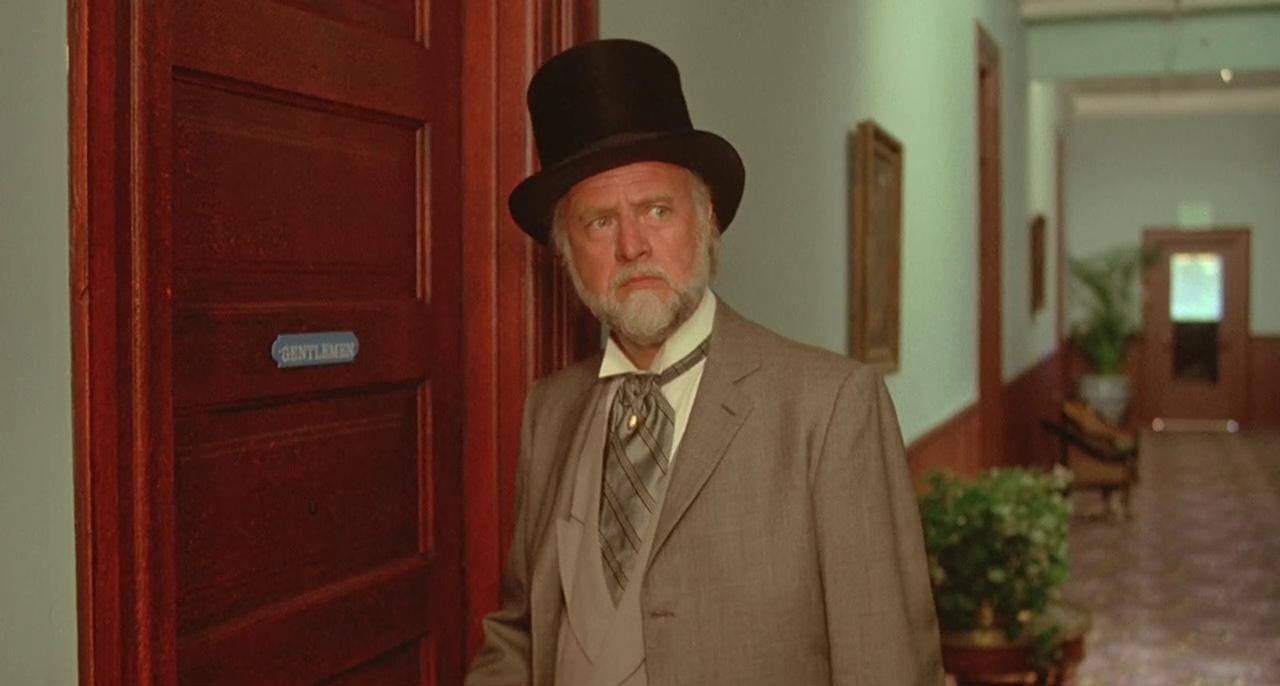
There’s no nameplate, but Arthur, a baggage handler who’s been at the hotel since he was five and believes Richard is familiar, tells him it’s Elise McKenna, an actress who starred in a play in the hotel theatre in 1912. And Richard is now hooked. He stays to research her and he inevitably discovers, in a magazine article on her final years, that the final photo ever taken of her is the old lady who gave him the watch.
Of course, we know where this is going and his discovery in the hotel registers that he was a guest in 1912 just underlines it. He must still figure out to get there and that’s a fascinating story, one sparked by a visit to his philosophy teacher back at Millfield, who wrote a book on travelling through time. He did it by hypnosis but realised that having modern stuff around brought him back out of it.
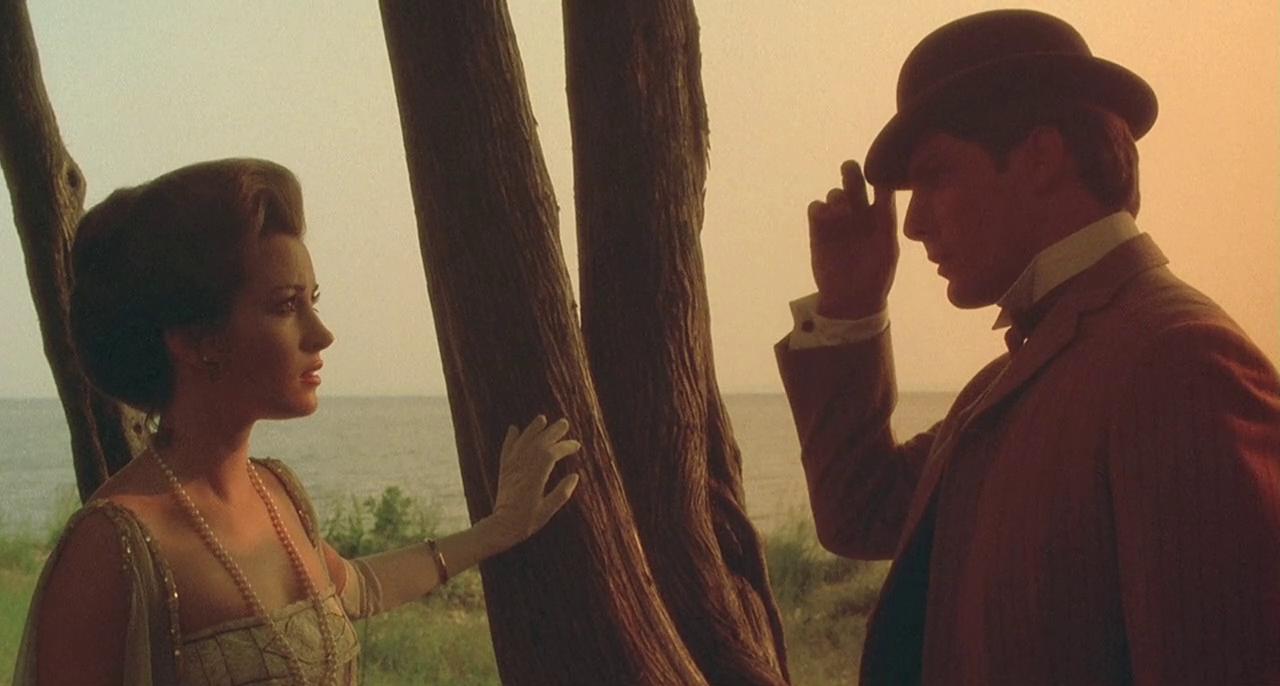
So Richard goes whole hog. His clothes. His hair. All the way to the coins in his pocket. He records what he wants to stick in his head and plays it while he’s awake and asleep. The goal is to travel back in time to the night before the play in 1912. Thirty-five minutes in, he does it. We can hear the horses outside and the room’s completely different. So to find Elise.
 |
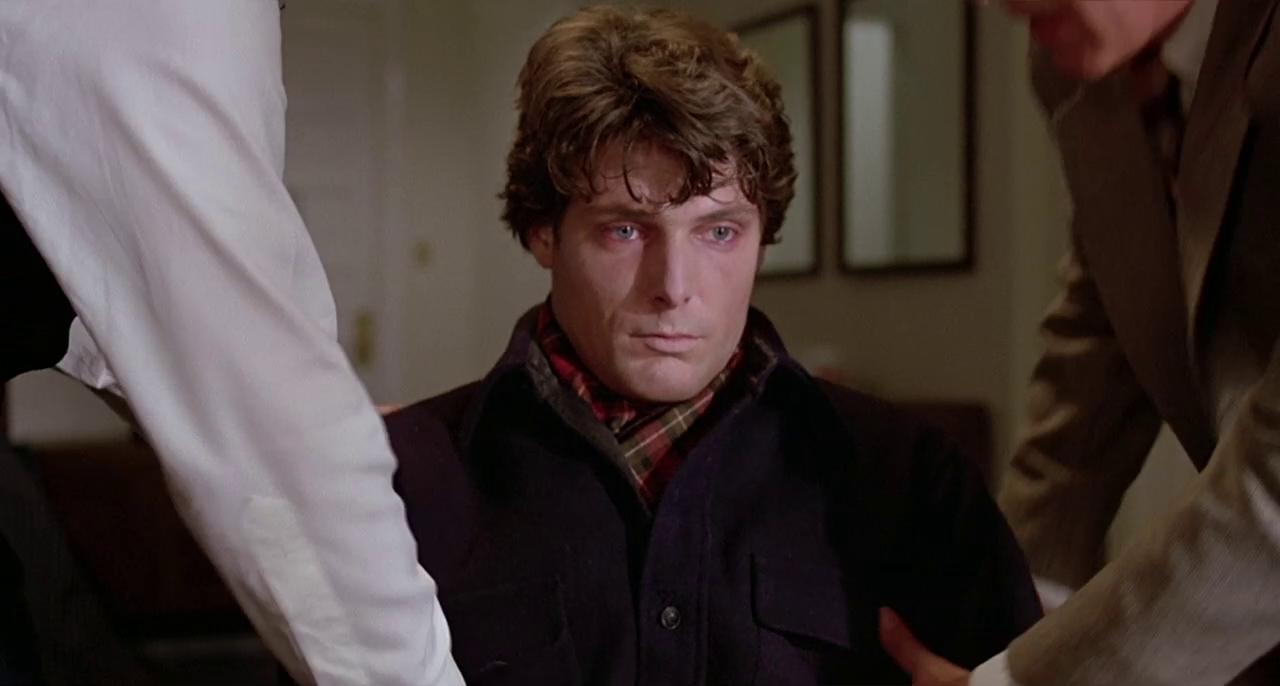
There’s an old debate in film circles about a difference between actors and movie stars. I’d usually argue that Christopher Reeve was star over actor, perhaps because I’ve tended to see him in work that needed that. However, he is a revelation here, carrying the entire picture for most of its running time. It’s only his for three quarters of an hour, he matches Seymour and Christopher Plummer when they show up and he’s blistering at the end, believably lost.
Now Seymour and Plummer are solid too, in roles with less depth than Reeve’s. Seymour is Elise, of course, a lovely and talented actress under the thumb of controlling agent William Fawcett Robinson, Plummer’s role.
It isn’t quite the love triangle that we might expect but it does play out like one, Robinson doing everything a jealous husband might do to keep a suitor away from his wife. It’s fun to watch but frustrating if we’ve bought into the central romance and want it to work.
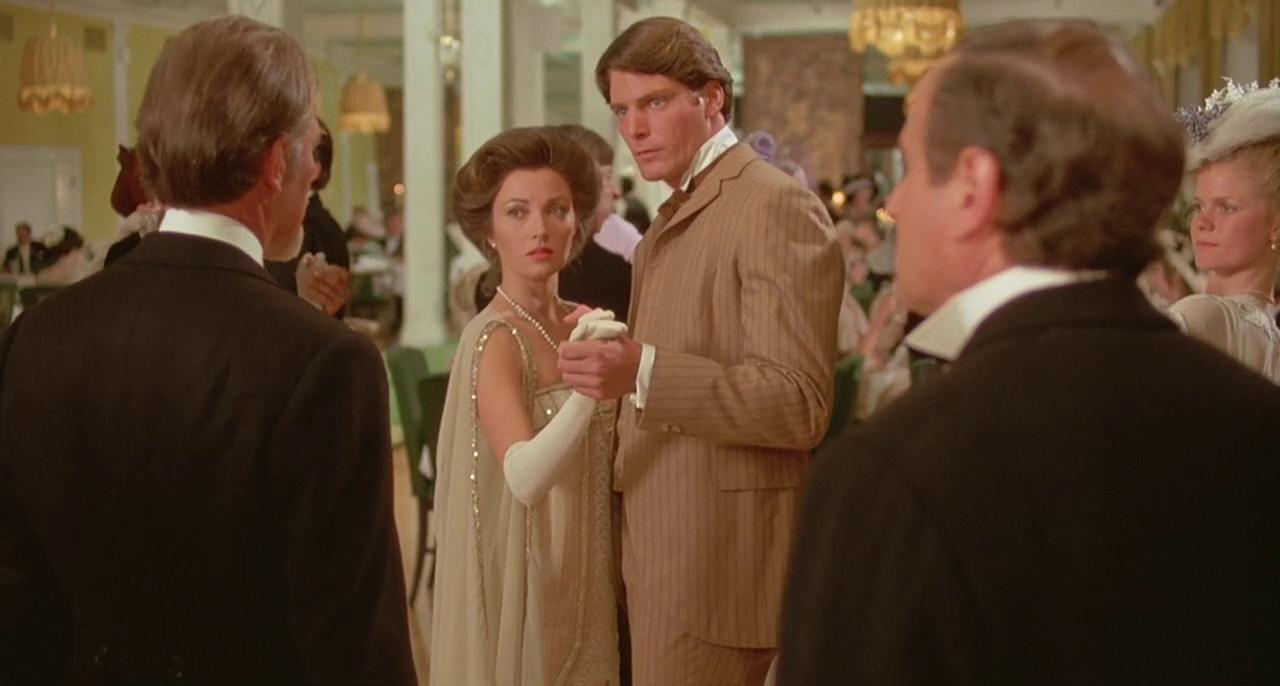 |
In many ways, it’s about obsession, with one obsessed man against another, even if the pair are obsessed for different reasons, one of them in love and the other in control. Richard wants her to be alive, to love, to live. Robinson wants her to be the best actress in the world, to have the success that that would bring. She’s in the latter mode when we meet her, but Seymour’s letting down of her hair is the point she shifts to the former, the act literal and metaphorical.
Richard Matheson, who has a brief moment on screen here in 1912, does a wonderful job of telling a simple romance in a complicated way that opens it up for all sorts of discussion. His source novel from 1975, Bid Time Return, might well do that even better, but that’s routine for adaptations of books, even if by the author. Of course, he was hardly new at being adapted.
He was born in Allendale, New Jersey to two Norwegian immigrants who divorced when he was eight, the year he published his first short story in a newspaper called the Brooklyn Eagle. After service in the army in Europe in World War II, he obtained a degree in journalism and moved to California to become a writer.
 |
He joined the Southern California Sorcerers, a writing collective with William F. Nolan, Ray Bradbury and Charles Beaumont as members. They were the writing bedrock for Rod Serling when he presented The Twilight Zone.
Matheson’s first sales were short stories to science fiction magazines, with his first novel, Someone is Bleeding, published in 1953. He soon soon hit his stride: I am Legend, The Shrinking Man and A Stir of Echoes following by 1958. All have been adapted into films, the former four times, and that continued throughout his life with The Beardless Warriors, Ride the Nightmare, (The Legend of) Hell House, Bid Time Return and What Dreams May Come all filmed.
 |
His short stories often turned into episodes of The Twilight Zone, The Outer Limits and more. His story Duel became the Spielberg TV movie of note and all three stories in Trilogy of Terror were his, including Amelia with the Zuni doll. His most famous adaptation must be Nightmare at 20,000 Feet, as an episode of The Twilight Zone and a segment in Twilight Zone: The Movie.
He also wrote directly for film: four scripts for Roger Corman, The Devil Rides Out and both the Carl Kolchak TV movies. Given those, we’ll perhaps forgive him for Jaws 3-D.
He won countless awards, but he may have considered three of four kids being writers as the best of them. He died at 87 in 2013.


 Posts
Posts


No comments:
Post a Comment