Tuesday, 23 December 2025

The Pigeon That Took Rome (1962)

Director: Melville Shavelson
Writer: Melville Shavelson, based on the novel The Easter Dinner by Donald Downes
Stars: Charlton Heston, Elsa Martinelli, Harry Guardino, Baccaloni, Gabriella Pallotta, Marietto and Brian Donlevy

Index: 2025 Centennials.

In 4:3 aspect ratio, Paramount News tells us that Italy has been freed from the bondage of the Nazis and that a U.S. General has honoured the Carrier Pigeon Hero of Liberation. No, says the recognisable voice of Charlton Heston. The pigeon is an impostor! And so we rewind back and shift into anamorphic widescreen, though we remain in black and white.

If that didn’t suggest a comedy, the opening scenes underline it. The Italians throw bombs from bicycles, so the Nazis ban bicycles, so the Italians switch to tricycles. So it goes.

Where it will all end up is never in doubt, in part because we know that the Nazis lost the Second World War but also because everybody in Italy knows that the American Fifth Army is on its way. What nobody knows is when they’ll get there and until they do it’s about survival. Somewhere in between lies our story.

Thursday, 18 December 2025

Always a Bride (1953)

Director: Ralph Smart
Writers: Ralph Smart and Peter Jones
Stars: Peggy Cummins, Terence Morgan and Ronald Squire

Index: 2025 Centennials.

While this is a sedate British comedy about gentlemanly crooks plying their trade on the French Riviera, it unfolds against a historical backdrop that sent me down a rabbit hole and I wish the filmmakers had explored it deeper.

As we begin, our focus is on Terence Winch, who’s trying to change his hotel room without luck. We soon learn that the hotel is trying to subtly pressure him into to leaving because he intimidates their guests. It’s because his job is literally to stop them spending money.

And, because that seems to make absolutely no sense at all, I need to explain. He’s an agent of the British Treasury enforcing UK exchange controls that were designed during World War II to avoid a run on the pound and to ensure a steady flow of foreign imports. Sounds crucial, doesn’t it? Well, it probably was in 1939 during wartime but the law lingered on for decades.

Saturday, 13 December 2025

Fitzwilly (1967)

Director: Delbert Mann
Writer: Isobel Lennart, based on the novel A Garden of Cucumbers by Poyntz Tyler
Stars: Dick Van Dyke, Barbara Feldon, John McGiver, Harry Townes, John Fiedler, Norman Fell and Edith Evans

Index: 2025 Centennials.

While I review a lot of movies on hundredth birthdays, it’s rare that I get to do it while the centenarian is alive and celebrating, but today actually is Dick Van Dyke’s centenary and he’s still going strong. Why not tackle a film that I haven’t seen before that he made when he was forty-two, the ultimate answer?

I enjoyed this immensely but I left it with a string of questions, starting with, “Why wasn’t this British and black and white?” It feels like a classic Ealing comedy remade in Hollywood, keeping Dame Edith Evans because who could replace her, but recasting most other roles.

She’s Miss Victoria Woodworth, delightfully haughty as an old and rich force of nature who requires a vast staff to run her huge New York mansion and signs endless cheques to endless charities. The only catch is that she hasn’t any money and hasn’t had since her father left her a measly hundred and eighty bucks.

Monday, 8 December 2025

A Man Called Adam (1966)

Director: Leo Penn
Writers: Les Pine and Tina Rome
Stars: Sammy Davis Jr., Louis Armstrong, Ossie Davis, Cicely Tyson, Frank Sinatra Jr., Mel Tormé and Peter Lawford

Index: 2025 Centennials.

The poster appropriately points out that “in Adam’s world... the music never stops!” That’s pretty true because music is everywhere here. Even when Adam Johnson isn’t performing on stage, there’s music in the background: on the radio, on the jukebox, even on his reel-to-reel tape deck. Manny, his powerful agent, points out his problem: “Take that horn away, buddy, and what have you got? Nothing.”

It’s also our problem, because, while Sammy Davis Jr. is blisteringly good as Adam, he’s the sort of disaster of a human being that we can’t find much sympathy for, even if he truly went off the rails a decade ago in the aftermath of a tragic accident that took his wife and baby.

Instead, we’re asked to sympathise with the people who are closest to him. Nelson, his best friend from childhood, played by Ossie Davis, cites “that excitement, that quality of personal danger” as why Adam’s a genius and also why he can’t stop being there for him, regardless of what he’s done in the past.

Saturday, 6 December 2025

The Plastic Age (1925)

Director: Wesley Ruggles
Writers: Eve Unsell and Frederica Sagor, based on the novel by Percy Marks
Stars: Donald Keith and Clara Bow

Index: That's a Wrap!

As I write, Paramount are involved in a new merger, trying to buy Warner Brothers against opposition from Netflix. This film was made by Preferred Pictures, who had been founded by a former Paramount publicist in 1918, who then merged his company with Paramount because they wanted its leading lady, Clara Bow.

I’m watching with her in mind, even though the film is far more about the character played by Donald Keith. There are reasons why Clara Bow’s name is still remembered while Keith’s is not and they’re obvious after she’s been on screen for about ten seconds.

I did have other names in mind too, because I know that Clark Gable and Carole Lombard are both in here somewhere, as they would be again later in the month in Ben-Hur: A Tale of the Christ, but I couldn’t find either of them. It was early for both of them, as neither made a major name for themselves until the thirties. They were both huge stars when Donald Keith was retiring, in 1936, though not yet married to each other. That happened in 1939.

In 1925, twenty-two year old Keith is the all-American boy ready to go to Prescott College, with the fastest 440 yard dash ever made by a prep student. We’re also told that the thrill of going to college is the thrill for the plastic age of youth, which is the only mention of the title anywhere in the film.

Monday, 3 November 2025

Deathmaster (1972)

Director: Ray Danton
Writer: R. L. Grove
Stars: Robert Quarry, John Fiedler, Bob Pickett, William Jordan, Betty Anne Rees, Bill Ewing and Brenda Dickson

Index: 2025 Centennials.

Roger Ebert gave this movie just one of four stars but clearly had a lot of fun talking about how bad it was and all that seems fair. It’s not simply a bad movie, though it is that. It’s a bad movie that surprises us, that confuses us, that we find we really have to ask questions about. Even now, I’m struggling to answer the pivotal one that lords over all the others: “Why?”

What makes sense is that it’s a vampire flick starring Robert Quarry. He’d had a big hit two years earlier with Count Yorga, Vampire, and he followed that up with a 1971 sequel, inevitably The Return of Count Yorga, then began 1972 with the wonderful Dr. Phibes sequel, Dr. Phibes Rises Again. He was suddenly a horror name and so why not make him Khorda, another vampire?

What doesn’t make sense is everything else. Yes, I realise that sounds like hyperbole but let me explain, because I’m at a loss to grasp any other decision made by the filmmakers. Maybe you’ll be able to figure it out. I hope so.

Saturday, 1 November 2025

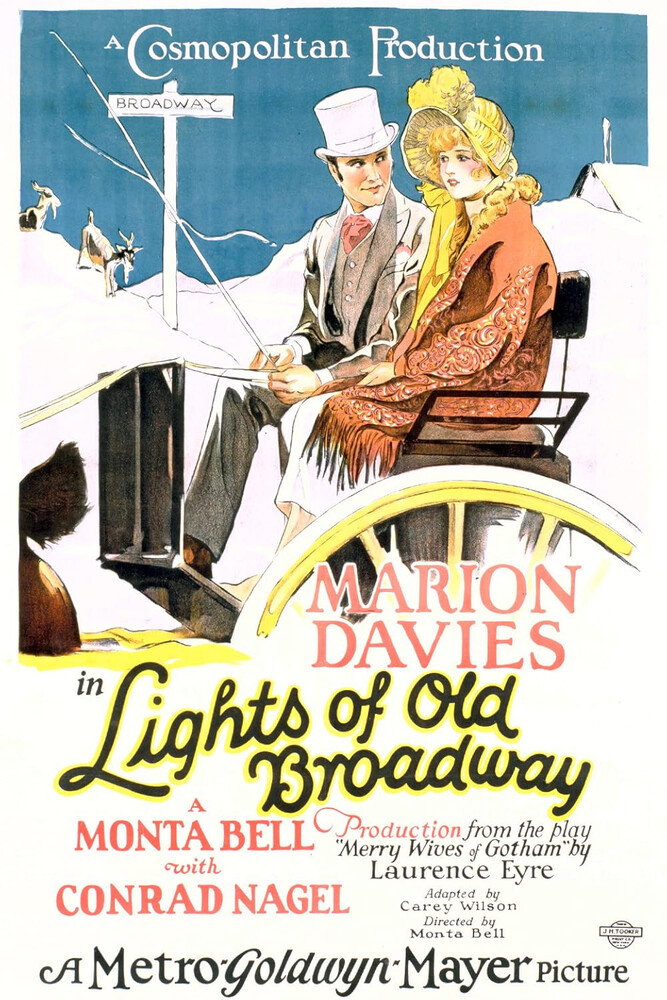
Lights of Old Broadway (1925)

Director: Monta Bell
Writer: Carey Wilson, from the play Merry Wives of Gotham by Laurence Eyre, with titles by Joseph W. Farnham
Stars: Marion Davies and Conrad Nagel

Index: That's a Wrap!

“Some of us are born to be lucky...”, says the opening intertitle, “and others are lucky to be born.” That’s Joseph Farnham earning his pay for titles already. Marion Davies plays both, as a pair of sisters orphaned on board a ship on its way to New York and fostered by different parents at opposite ends of the social scale.

We quickly leap past childhood so Anne De Rhonde can be “petite and perfectly bred” at a choice address in Washington Square but Fely O’Tandy, the sister she doesn’t know she has, only “rough, roguish and Irish” down in the ethnic slums.

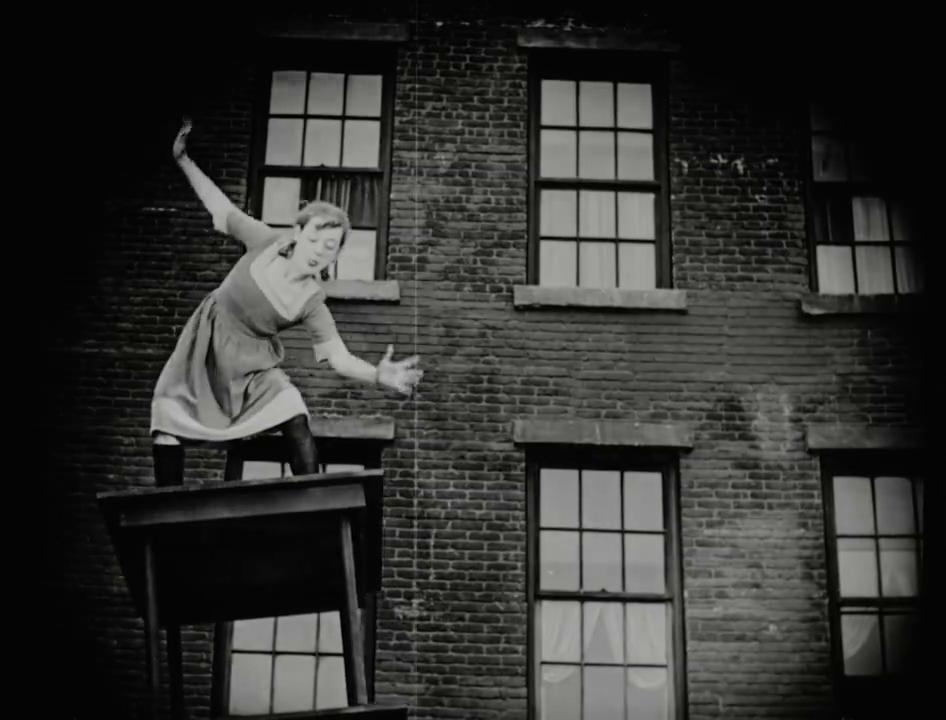
There’s more opportunity for Davies in Fely so naturally we concentrate on her, beginning with her climbing to the top of a ridiculously large stack of tables in the street, then tipping them over, miraculously sustaining only a few bruises in the process.

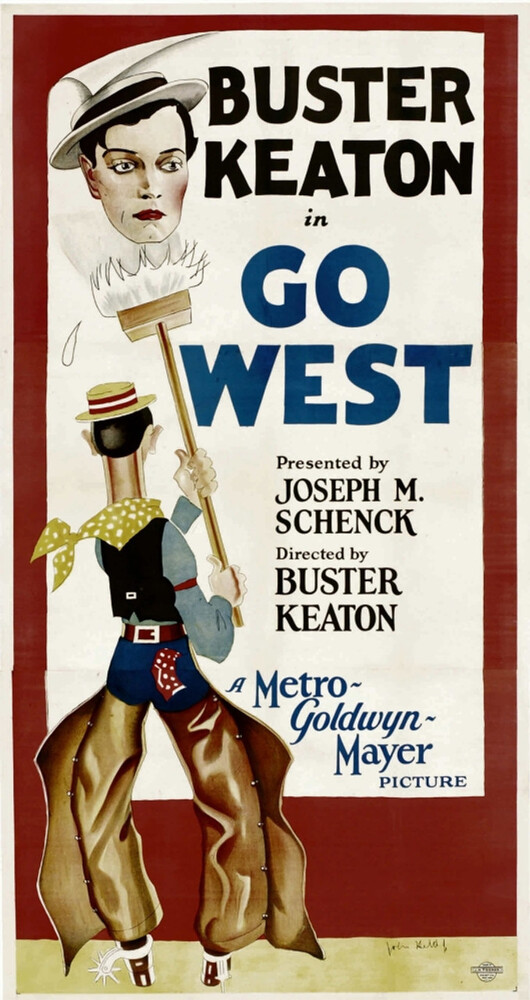
Go West (1925)

Director: Buster Keaton
Writers: Buster Keaton and Lex Neal, from a scenario by Raymond Cannon
Star: Buster Keaton

Index: That's a Wrap!

The second of Buster Keaton’s two features for 1925, Go West is a far more subtle film than Seven Chances, or indeed any of his earlier full length films. I’m used to suggesting words like “frantic”, “acrobatic” and “impressive”. None of those spring to mind here. I’d offer “slow”, “calm” and “gentle”, at least until the finalé.

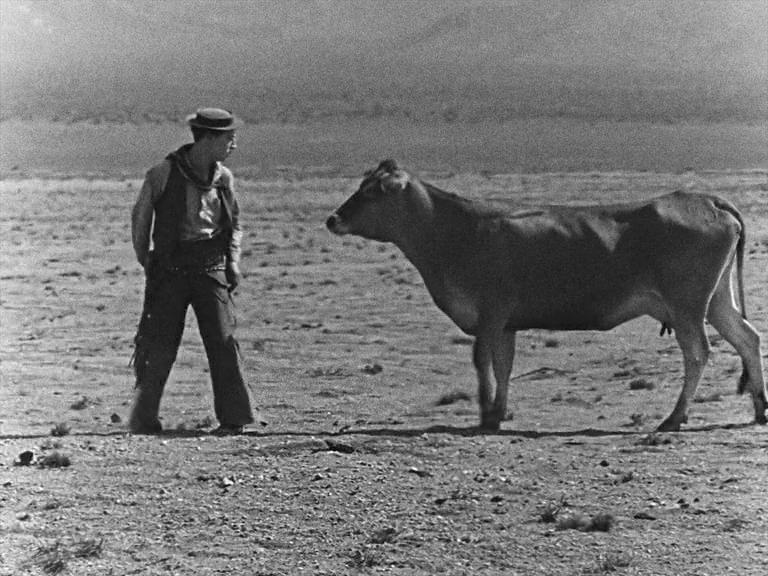
That finalé involves Buster dressed in red as a devil to lead a herd of cows through the city of Los Angeles to the stockyards. It reminds a great deal of the finalé to Seven Chances, where his pursuers were would-be brides—a different meat market, I guess—but it’s initially slower, gaining pace only when he finds the costume.

Until then, it’s gentle comedy performed at a gentle pace, the best scene the first one, still in the east. Buster plays Friendless, the credits tell us, and it’s a fair name. The shopkeeper he meets as we start certainly isn’t his friend and neither is anyone else at any point in the film. Well, except Brown Eyes, who plays herself.

Friday, 31 October 2025

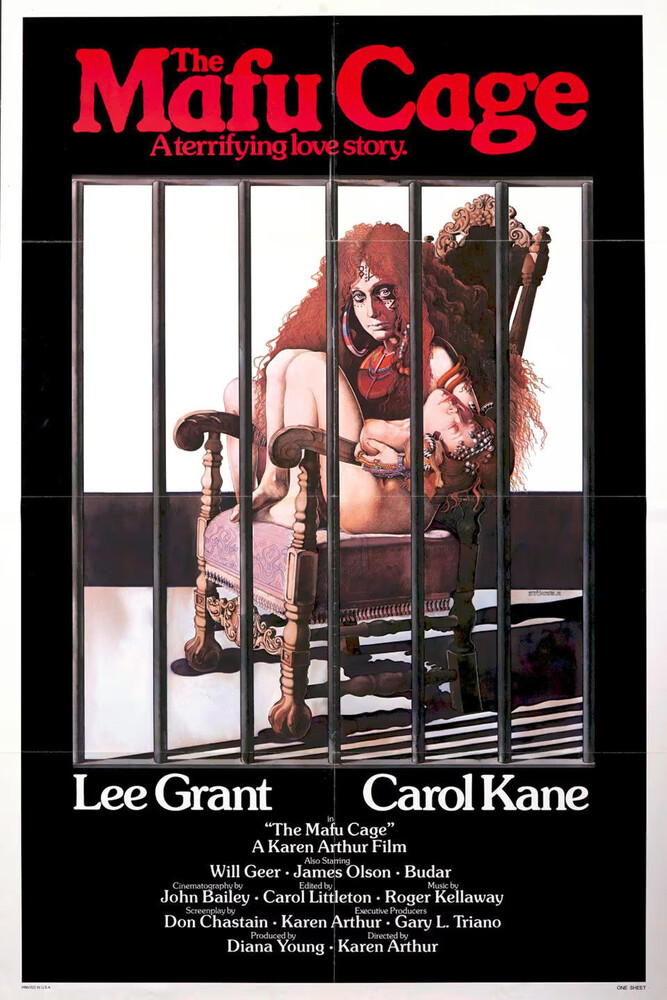
The Mafu Cage (1978)

Director: Karen Arthur
Writer: Don Chastain, based on the play Toi et Tes nuages by Éric Wesphal, translated into English by Richard Cottrell
Stars: Lee Grant and Carol Kane

Index: 2025 Centennials.

The Mafu Cage is an American film that was widely seen in Europe but little seen at home. I can see why, because it’s a very European film, indeed one based on a French play. I can also see why Jerry Gross, a distributor who kept on trying the U.S. market under an array of titles, went bankrupt. I’m European. I adored it.

I’m watching a version called Deviation that includes a brief voiceover at the beginning, as my copy of The Mafu Cage is an extremely dark open matte version. However, that omits the voiceover. Hopefully the rest was unchanged.

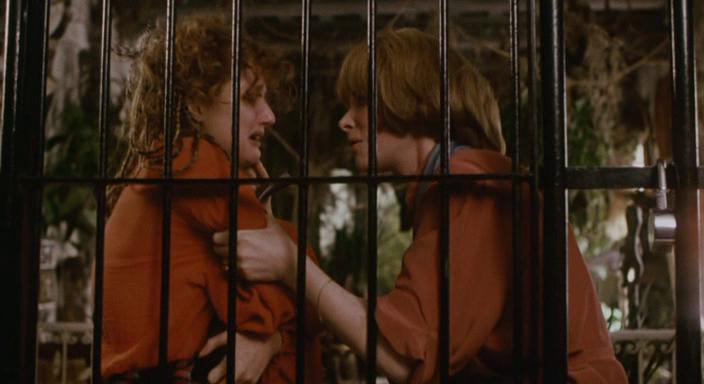
We’re in Los Angeles but it doesn’t seem like it because we hardly see it. We spend most of the film at the home of Dr. Ellen Carpenter, an astronomer who specialises in solar activity. If we leave the house, it’s to visit her at work so that we can see the life that she tries to have, a life with a purpose and the potential for more, as a co-worker, David Eastman, tells her he’s in love with her. However, she’s unable to fully embrace life so keeps him at arm’s length.

Wednesday, 29 October 2025

Demons of the Mind (1972)

Director: Peter Sykes
Writer: Christopher Wicking, from a story by Christopher Wicking and Frank Godwin
Stars: Paul Jones, Patrick Magee, Gillian Hills, Robert Hardy, Michael Hordern and Yvonne Mitchell

Index: 2025 Centennials.

I wanted to see 1973’s Yellow Dog for Robert Hardy’s centennial but it’s stubbornly elusive and I couldn’t find a copy. Instead, I went with this kinda sorta Hammer horror from the year before. I hadn’t seen it before and he’s the lead character, however the order of credits reads, so it seemed like a good choice. However, now I understand why it’s not better known.

It worked best for me as a mood piece, a sort of impressionistic painting, because the film is as unhinged as its subject matter. We’re never quite sure of much that happens or why and, if I ever imagined that the ending would clear it all up, then I was horribly wrong. Half of me is eager to watch it again to discover what I had missed that would make sense of it all, but the other half is convinced that it wouldn’t help.

Initially, it’s all about Elizabeth. She’s in the back of a horse drawn carriage heading home to her family’s castle down a woodland path. It could easily be a Disney princess story but she clearly doesn’t want to be there and her older companion drugs her. Then she calms and we drift into either a memory or a dream. I’m not sure which, given that she spends it blissfully with a woodcutter but neither of them speaks.