Monday, 30 January 2023

Raising Arizona (1987)

Director: Joel Coen
Writers: Ethan Coen and Joel Coen
Stars: Nicolas Cage, Holly Hunter, Trey Wilson, John Goodman, William Forsythe, Sam McMurray, Frances McDormand and Randall ‘Tex’ Cobb

Index: The First Thirty.

Nicolas Cage was generally panned for his creative decisions in The Boy in Blue and I was far from enthused by them in Peggy Sue Got Married, though some critics admired his balls in playing Ronny in a way nobody else would. Here is where his creative decisionmaking hit the jackpot for me, because he’s simply perfect as H. I. “Hi” McDunnough.

I’ve seen Raising Arizona before and loved it. It doesn’t stand up quite as well to a fresh 2022 viewing, but it’s still a peach of a comedy from two favourite filmmakers, Joel and Ethan, the Coen Brothers. It’s surreal, which works well for a Nicolas Cage lead role, and it’s cartoonish in similar ways to Crimewave, a film they wrote but Sam Raimi directed. I adore Crimewave but acknowledge that it’s a highly flawed picture. This is better, not least because it’s focused.

Hi is a small time crook who’s inept enough to keep getting sent to prison for convenience store robberies, each time being routed to Ed to take a mugshot. The first time she’s military strict. The second time she’s in tears after her fiancé had left her. The third time Hi proposes.

She’s played in gloriously crisp fashion by Holly Hunter and she’s a great contrast to Hi. He’s tall, she’s short. He’s a crook, she’s a cop. He’s easygoing, she’s dedicated. It underpins the entire movie.

Of course, the two marry and settle down to a quiet and theoretically honest life in a trailer in the desert outside Tempe, Arizona. The only catch is that Ed wants kids but it turns out that she’s infertile. And so, in an act of poorly justified desperation, they see that furniture magnate Nathan Arizona’s wife just gave birth to quintuplets and figure that they won’t miss one of them.

Hunter is excellent here, but Cage is better still, in a role that he was born to play. Hi is a sympathetic fool, a man with little brain but much heart, a devoted husband who would do anything to make his wife happy. He also has a lot of depth, not least because this new crime births a dark side to his character that’s given form by a memorable Randall ‘Tex’ Cobb. The quirks of Hi’s personality were mostly scripted by the Coen Brothers, who were not open to a surrealist like Cage moving the goalposts, but he nails every aspect of the character.

Sunday, 29 January 2023

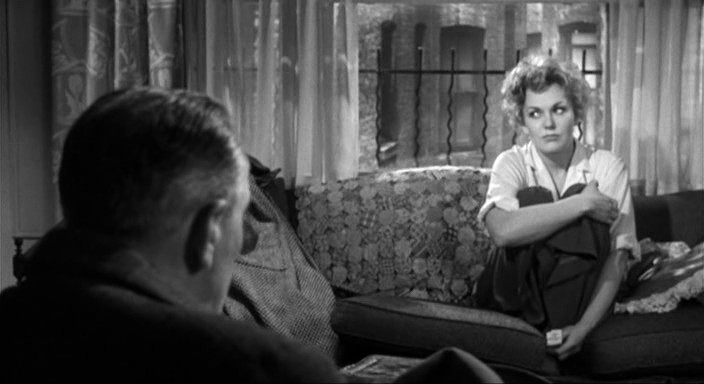
Middle of the Night (1959)

Director: Delbert Mann
Writer: Paddy Chayefsky, based on his play
Stars: Kim Novak, Fredric March, Glenda Farrell, Albert Dekker, Martin Balsam, Lee Grant and Lee Philips

Index: 2023 Centennials.

Not all people important to film are actors and not all of them had long running careers. Sidney Aaron Chayefsky, better known as Paddy from an army nickname, was a writer. He only has a short list of films to his name, because his early Hollywood experiences were far from positive and he preferred writing for other media, but he won three Academy Awards for his work, the only person to do so without a co-writing credit. He initially went to Hollywood in 1947, planning to become a screenwriter, and landed a job at Universal with the help of a couple of friends, Garson Kanin, a playwright and director with whom he’d worked on a documentary in London, The True Glory, and his wife, the actress Ruth Gordon. However, Universal rejected all his scripts and fired him after six weeks. He went back one year later after writing a play in New York that was bought by 20th Century Fox, but he found Hollywood a world that didn’t value writers and rewrote everything, so he quit and went back to New York, vowing never to return.

He did return, of course, or you wouldn’t be reading about him here, but not until he’d built a reputation on radio and especially on television, where he wrote plays that were performed on dramatic anthology shows like Philco Television Playhouse. Once he made it big with Marty, a 1953 Philco play starring Rod Steiger before it was adapted into an Oscar-winning film in 1955 with Ernest Borgnine, Hollywood proved eager to adapt more of Chayefsky’s television plays. The Catered Affair was a 1955 play for Goodyear Television Playhouse before it was a 1956 movie; The Bachelor Party was a 1953 play for Philco before it was a 1957 movie; and Middle of the Night was a 1954 play for Philco before it was a 1959 movie. It starred E. G. Marshall and Eva Marie Saint on television, a success which prompted a Broadway production in 1956 with Edward G. Robinson and Gena Rowlands that obtained a national tour and that became this feature version with Fredric March and Kim Novak. Suddenly Chayefsky was a big name in film.

Friday, 27 January 2023

Peggy Sue Got Married (1986)

Director: Francis Coppola
Writers: Jerry Leichtling and Arlene Sarner
Stars: Kathleen Turner,
Nicolas Cage, Barry Miller, Catherine Hicks, Don Murray, Barbara Harris, Jim Carrey, Wil Shriner, Joan Allen and Kevin J. O’Connor

Index: The First Thirty.

Here’s a film that both my better half and I thought we’d seen before, albeit a long time ago, but discovered that it was new to us. Why I have no idea, because it seems like the sort of film we’d both have watched, even if it would have been for different reasons.

At the time, it was a Kathleen Turner movie, at a point when she was a huge star and so was able to pick her roles, but before she got truly interesting in films like Serial Mom. Nowadays, I’m watching for Nicolas Cage, who is, as far as I could tell, the worst thing about the film. If I had been watching in 1986, though, and you’d asked me who would become a big star, I may well have told you Jim Carrey, even though I have never been a particular fan of his.

And, of course, it’s a Francis Coppola movie, sans his Ford middle name again. And yes, that does mean that Sofia Coppola shows up again as a younger sister. Cage has said that he had no intention of doing the movie, but his uncle asked so many times that he agreed, but only if he could be over the top. Which he is. He’s Crazy Charlie the Appliance King, the star of a set of over the top commercials for his family appliance company as an old man and also the owner of an awkwardly high voice as a young one, a voice that makes him sound like he’s on a dose of helium. He has said that he based it on Pokey in The Gumby Show. It was a Bad Idea and Kathleen Turner knew it.

Wednesday, 25 January 2023

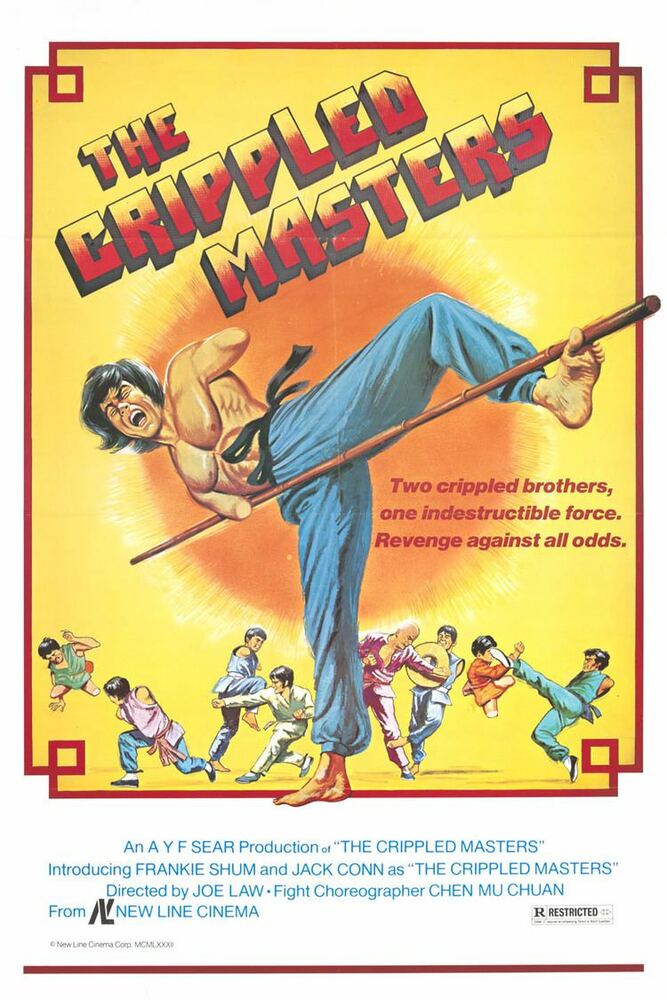
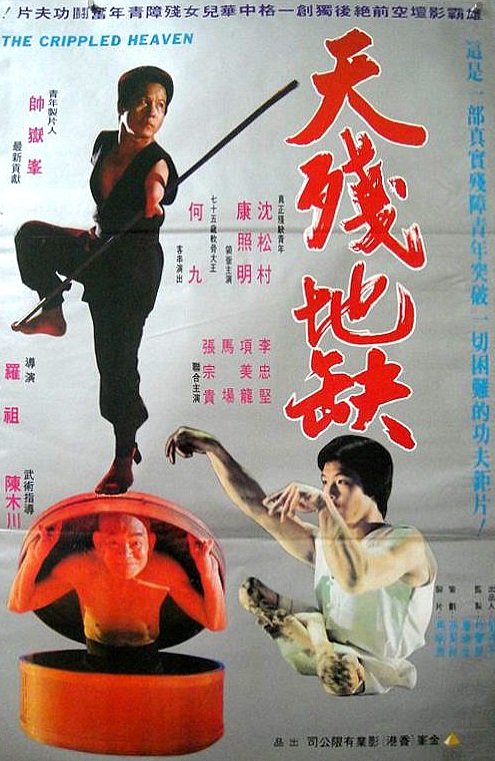
The Crippled Masters (1979)

Director: Chi Lo (Joe Law)
Writer: Unknown
Stars: Li Chung Keng, Chen Mu Chuan, Frank Shum, Jack Con and Ho Chiu

Index: Weird Wednesdays.

Every now and then, I see mention of Blazing Saddles, the groundbreaking 1974 Mel Brooks comedy, and, wherever that mention is, it’s usually accompanied by two opinions: firstly, it’s still incredibly funny, and, secondly, nobody could remake it today. Now, they may have a point about that (even though they just did, as Paws of Fury), but The Crippled Masters never fails to spring immediately to mind as an equivalent. Even though it has an easy reading as a film that enables the disabled, it’s so outrageous in the way in which it does so that many would find it difficult to watch and I can’t imagine that anyone could tread this ground in 2020. I adore it and, even though it’s a truly awful film in many quantifiable ways, I think I always will, however many times I watch it. The basic idea is to cast a martial arts movie with cripples, a word I only use here because it’s the word used throughout the English dub of the film to describe the characters at its heart. That’s not just Lee Ho and Tang, the two crippled masters of the title, but presumably their nemesis, Lin Chang Cao, as well.

It’s Lee Ho we see first, losing his arms in a judgement by his boss. No, I’m not talking about heraldry, I’m talking about the severing of his upper limbs with a sword. Fewer than ten seconds after the opening credits wrap, we hear a scream and watch an arm fall to the Pluahchi crime organisation’s courtyard floor and, fifteen seconds later, his other arm joins it. We don’t actually see the act and the fake arms are props, but it appears shockingly real. This is a Hong Kong movie shot in Taiwan in 1979, after all. Do you think the production had a CGI budget? This is surely why there’s surprisingly little blood and no arterial spray, but the actor, Frankie Shum, is clearly not hiding his limbs inside his shirt or behind his back. It looks as if he just has no arms, only a flipper-like stub sprouting out of his left shoulder that looks rather like a mandrake root. And, crucially, this is because he really has no arms. Shum was born with thalidomide syndrome, which often leaves flippers instead of limbs, among many other deformities and health issues.

Tuesday, 24 January 2023

The Boy in Blue (1986)

Director: Charles Jarrott
Writers: Douglas Bowie
Stars: Nicolas Cage, Christopher Plummer, Cynthia Dale, David Naughton, Sean Sullivan and Melody Anderson

Index: The First Thirty.

There have been a few surprises during my Nicolas Cage runthrough. The Best of Times was one for sure. That I’ve rather enjoyed much of what’s followed was another. And that it took him this long to make a theatrically exhibited dud is a third, but that’s exactly what it is.

Let’s start with a question. Cast your eyes at the poster above and hazard a guess as to when The Boy in Blue is set. That’s right! 1976.

Oh, sorry, you’re a century off. It’s 1876 and this is a biopic of a Canadian sculler called Ned Hanlan, who wore a moustache and not a Jane Fonda workout headband. Amazingly enough, he also sounded Canadian, given that he was, well, Canadian.

The problem isn’t just that Cage doesn’t try to approximate authenticity here, unlike the period pieces he had made immediately before it, it’s also that every other sculler in the film, and there are a bunch, look far more like Ned Hanlan than Cage does. He does a good job as a Californian surfer dude, which means that he kind of showed up for the wrong movie.

Monday, 23 January 2023

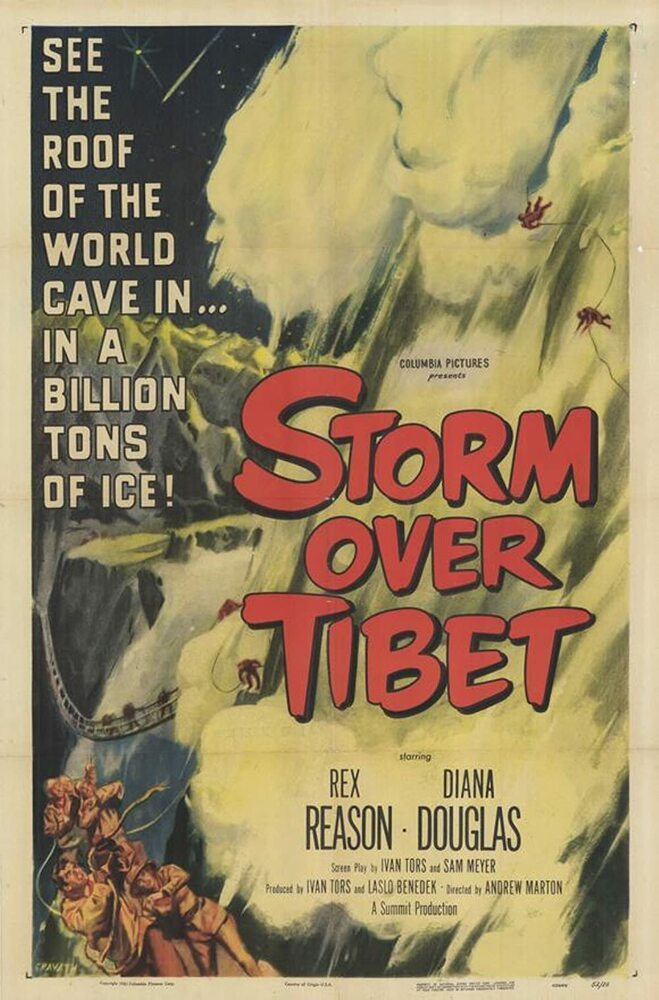
Storm Over Tibet (1952)

Director: Andrew Marton
Writers: Ivan Tors and Sam Meyer
Stars: Rex Reason and Diana Douglas

Index: 2023 Centennials.

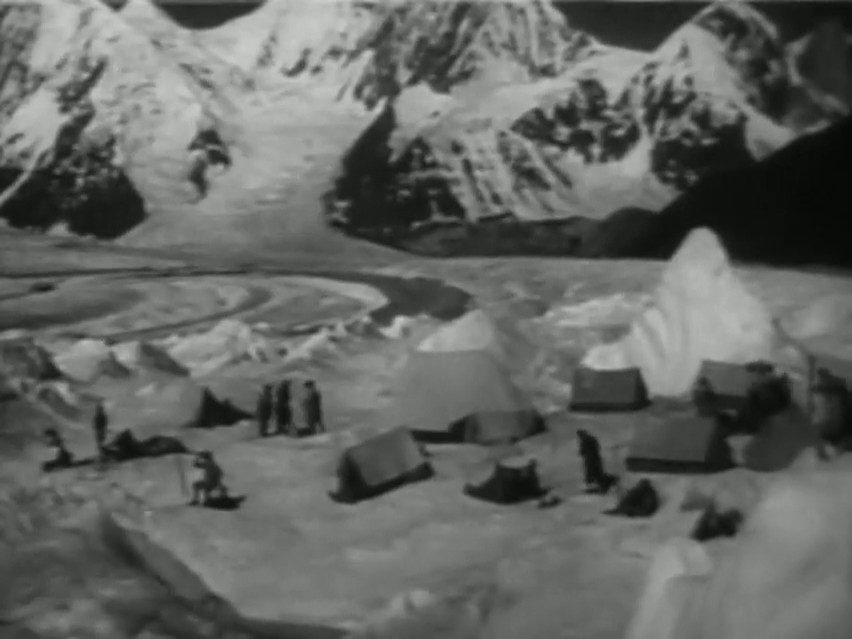
Storm Over Tibet isn’t a particularly well seen film, because it’s not widely available and so I had to watch a low resolution download from the Internet Archive. I’m happy I did, though, because it’s a fascinating movie, even if Diana Douglas, for whom I’m watching, is only prominent in one of the three acts and a supporting player in another. Then again, that’s still far more screen time than she had in The Indian Fighter, which I watched first because it’s regarded as a standout role in her career. I’m not sure why, because she merely plays one link in an unrequited love chain, albeit a particularly fascinating one. Will Crabtree wants to marry Susan Rogers, who wants to marry Johnny Hawks, who wants to be with Onahti. Respectively, the parts were played by Alan Hale, Jr., the Skipper from Gilligan’s Island; Diana Douglas; her recent ex-husband whose surname she still used, Kirk Douglas; and the Italian actress Elsa Martinelli in redface as a Native American chief’s daughter. As unlikely as it might seem, this is a more believable picture.

It also has a much more interesting history. For a start, it’s an American remake of a German/Swiss co-production from 1935, a film called Der Dämon des Himalaya or Demon of the Himalayas, that was directed by the same man, Andrew Marton, who was a Hungarian by birth, as Endre Marton. He’d started out in film as an editor in his own country but moved around, working at various levels in a variety of others: plenty of editing in Germany and a second unit direction job in Austria, with his first film as a director in the U.S. in 1929, Two O’Clock in the Morning a.k.a. House of Fear. It was for the Germans that he accompanied a Himalayan expedition to Tibet in 1934, which is where he shot Demon of the Himalayas, with some of the other participants appearing in the film. It was released in Germany without his name on it, as he was a Jew and the Nazis wouldn’t sanction that. However, Nazi Propaganda Minister Joseph Goebbels allowed him to make it, because the leading actors and the cameraman refused to do so without him at the helm.

Saturday, 21 January 2023

Birdy (1984)

Director: Alan Parker
Writers: Sandy Kroopf and Jack Behr, based on the novel by William Wharton
Stars: Matthew Modine and Nicolas Cage, John Harkins, Sandy Baron, Karen Young and Bruno Kirby

Index: The First Thirty.

Like Racing with the Moon, Nicolas Cage finds himself in a substantial supporting role, where he’s playing second fiddle to the lead who has more opportunities to shine. Like Racing with the Moon, he’s the dynamic half of the pair, as Matthew Modine is calmer and quieter, even before everything goes horribly wrong at war, after which point Modine doesn’t even speak.

Where they differ is that Birdy begins with these characters getting back from war rather than ending with them leaving for one. It’s not the same war, because Hopper and Nicky were leaving for World War II but Birdy and Al get back from Vietnam.

They don’t come back entirely intact either. Sgt. Al Columbato, Cage’s character, has a steel jaw wrapped up in bandages that cover half his face, just like he’s the Invisible Man. Birdy only has minor injuries but there’s something wrong with his brain. He hasn’t said a word in a month at the military hospital, he won’t feed himself and he spends his time contorted into strange positions looking at the light shining into his window. It’s pretty clear from the title that he thinks he’s a bird.

We learn why in the flashbacks that take up much of the film. Birdy’s a pigeon fancier and, when he and Al first meet as youths in Philly, they spend a lot of their time catching birds and training them to be carrier pigeons. They even wear feathered suits so that the birds will think that they’re like them, so they can catch them more effectively. After that phase ends, because these flashbacks are episodic and so there’s always another one to move onto, he continues to be involved with birds, obsessed with the idea of flight. He dreams about flying and he even learns to do it himself, for a little distance, using an ornithopter, after launching himself off the handlebars of Al’s bike.

And so, given that he’s had such an abiding affinity with birds as a youth, is it surprising that whatever traumatic situation he ends up in over there in Nam prompts him into a major reversion into thinking he’s a bird?

Wednesday, 18 January 2023

The Cotton Club (1984)

Director: Francis Coppola
Writers: William Kennedy & Francis Coppola, based on a story by William Kennedy & Francis Coppola and Mario Puzo, suggested by James Haskins’s pictorial history
Stars: Richard Gere, Gregory Hines, Diane Lane, Lonette McKee, Bob Hoskins, James Remar, Nicolas Cage, Allen Garfield and Fred Gwynne

Index: The First Thirty.

Hollywood hasn’t traditionally done a good job looking at history, its biopics just about as accurate as reality television is real, but, when it does look at history, that history tends to be almost exclusively white.

The Cotton Club is an admirable attempt to highlight a whole era of history, by focusing in on a single location that was highly important to both blacks and whites. It was made with a biracial cast by white filmmakers but based on a picture book history by a black educator. It’s predominantly set in a famous nightclub in a black area of New York that gave black singers and dancers well paid gigs but they performed for an almost exclusively white audience.

As a setting, it’s glorious. We’re in the 1930s so segregation is in firm effect. The races are not supposed to mix and Gregory Hines finds himself chastised for simply entering through the front door, even after he’s been hired as an entertainer. Also in effect is prohibition, as it had been for a decade, but the Cotton Club maintained a full drinks list for its clientele, as it was run by New York gangsters with clout in the community.

While I knew all that, I was still surprised to discover, as we soon do, that The Cotton Club is a gangster flick. I knew about it, that it was a Francis Ford Coppola film, that it was critically acclaimed even though the box office wasn’t great and that it was a film I should see, but I still somehow thought it was more about what happened on stage than off, that it was more about jazz music and dancers than gangsters and racial history.

Sunday, 15 January 2023

Racing with the Moon (1984)

Director: Richard Benjamin
Writer: Steve Kloves
Stars: Sean Penn, Elizabeth McGovern and Nicolas Cage

Index: The First Thirty.

This one was completely new to me. I could be excused for not knowing about The Best of Times, as everyone involved probably tried to pretend it never happened. I’d seen Fast Times at Ridgemont High and Rumble Fish and I knew about Valley Girl, even if I hadn’t seen it. This film, though, I had never even heard of.

It’s another Sean Penn movie, though he’s a clear lead this time out instead of just through growing consensus in hindsight. Co-starring is Elizabeth McGovern as his romantic lead. And that leaves Nicolas Cage as the also ran on the poster, easily in the third most prominent role but not a particularly sympathetic one.

Racing with the Moon is a comedy drama but there’s a lot more drama here than comedy. It also counts as a period drama, but for a period that isn’t that long ago, because it’s Christmas 1942 when we start out and Hopper and Nicky are two young men in Point Muir, California waiting to be called up for war.

It’s no spoiler to suggest that they don’t get there in this picture, because it’s all about the six weeks they have before they leave and, in large part, how they choose to spend it. And, yeah, that translates to who they choose to spend it with. In Nicky’s case, he wants to land as much tail as he can before he puts on a uniform, but Hopper only has eyes for one girl, even if he’s yet to talk to her when we start out. In fact, when the local hooker, in the delightful form of a young Carol Kane, offers him “a free ride on the old merry-go-round”, he doesn’t take it.

Thursday, 12 January 2023

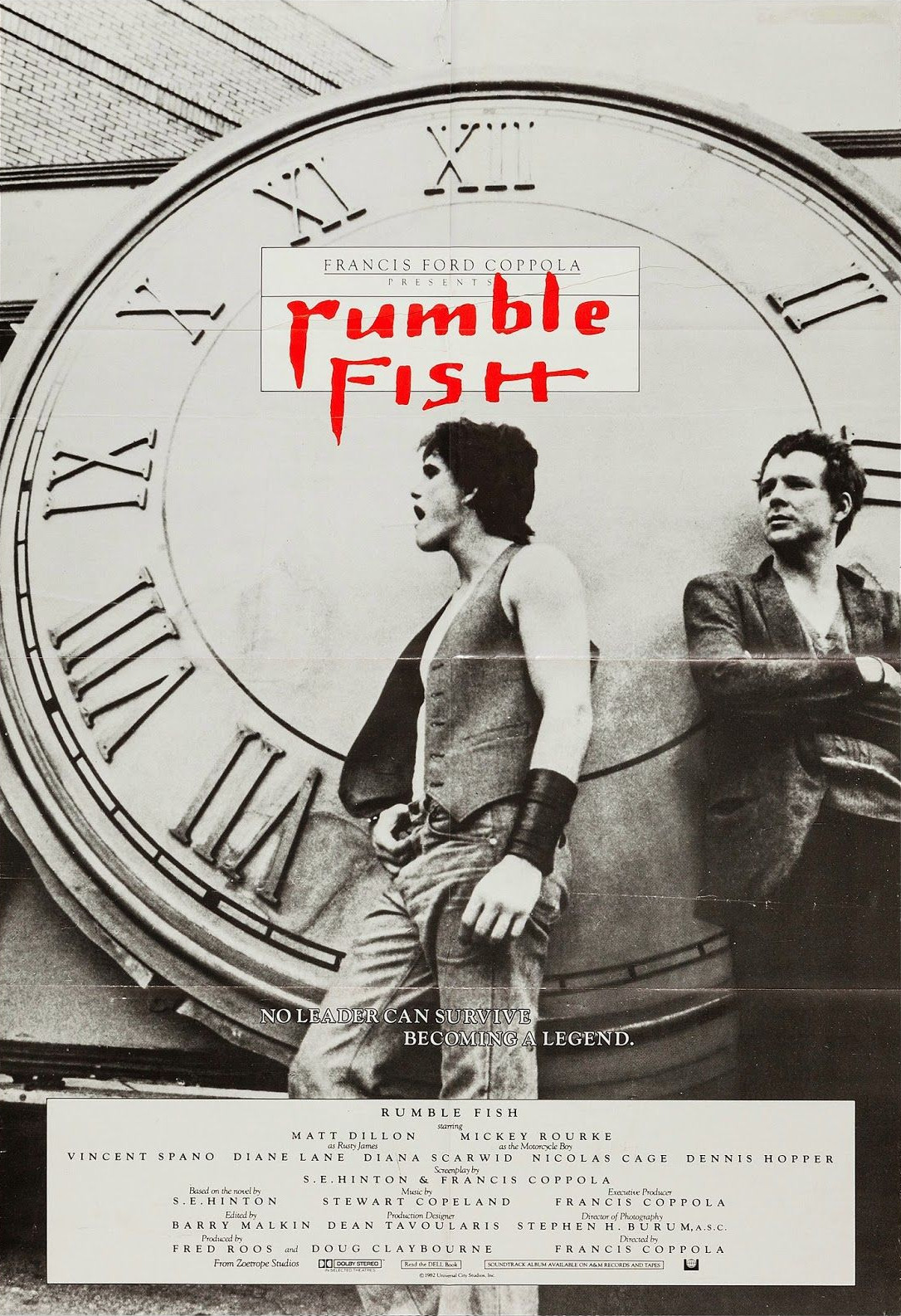
Rumble Fish (1983)

Director: Francis Coppola
Writers: S. E. Hinton and Francis Coppola, from the novel by S. E. Hinton
Stars: Matt Dillon, Mickey Rourke, Vincent Spano, Diane Lane, Diana Scarwid, Nicolas Cage and Dennis Hopper

Index: The First Thirty.

Before Valley Girl, Nicolas Cage appeared in Rumble Fish, the first of three eighties films for him that were directed by his uncle, Francis Ford Coppola. He would later make Deadfall for his elder brother, Christopher Coppola; their father, August Coppola, is Francis’s brother.

Francis Ford Coppola was a huge bankable name in 1983. He’d made some of the biggest and most important movies of the seventies, such as the first two Godfather films, Apocalypse Now—from which I got the name Apocalypse Later—and The Conversation. Arguably, that’s the only reason he was able to get this movie made, because it’s what he called “an art film for teenagers”. And he wouldn’t find it quite so easy to make something like it again.

It felt like a throwback to me, an homage to the rebel movies of the fifties but not to the rebels themselves. And that’s jarring, because the visuals in this movie, which are stunning, hearken back to the coolness of Brando and Dean and even, a little later, McQueen, but its message is that rebellion for the sake of it has become almost conservative.

When Brando’s character in The Wild One was asked what he was rebelling against, he famously answered, “Whaddya got?” If we ask Rusty James the same question here, he might say, “Because that’s what we’ve always done.” It’s his brother who might have a good answer but he’s keeping quiet. He’s the Motorcycle Boy, cool but educated, knowing and possibly half a dozen eggs short of a basket.

He’s also Mickey Rourke, in many ways the MacGuffin of the movie, because everyone is a fan of the Motorcycle Boy, the legend who got the gangs to observe a truce, but he doesn’t want the job any more. He sees the life that he’s lived as over and so he floats around in a vague attempt to persuade his idiot brother to wake up.