
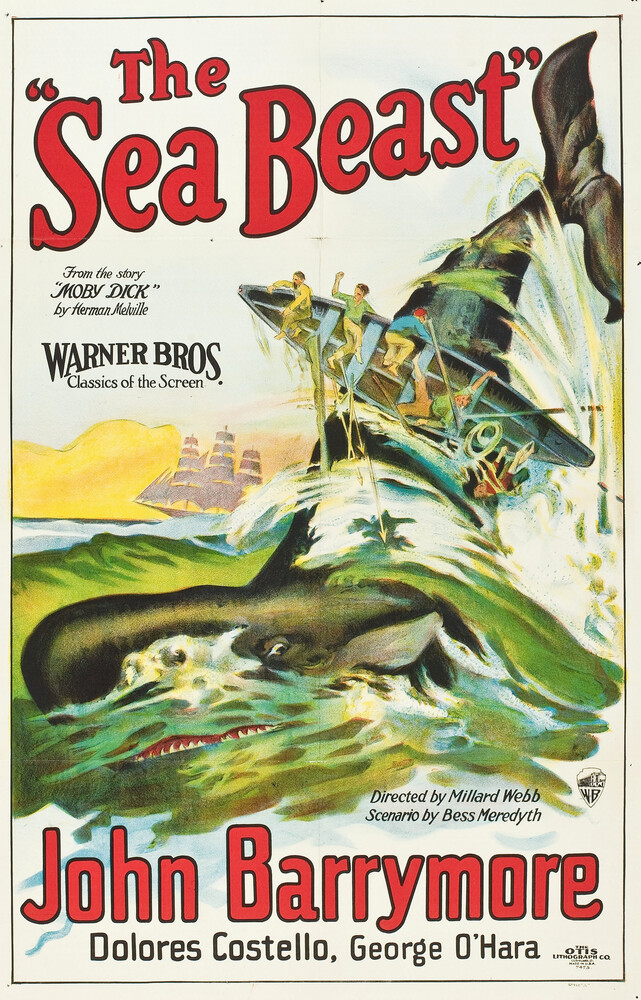
Director: Millard Webb
Writers: Bess Meredyth, based on the novel Moby Dick by Herman Melville
Stars: John Barrymore, Dolores Costello, George O’Hara and So-Jin
 |
Index: That's a Wrap!
By all accounts, The Sea Beast was successful, the tenth highest grossing movie of the year, a film given a sound remake as early as 1930. To me, watching the movie in the pitiful version that’s available today, it’s hard to see why.
For one, it’s an awful print. It reminds me of the old Keystone shorts Charlie Chaplin made in his first year in film. I’d seen most of those in crappy nth generation public domain copies but often couldn’t tell what the fuss was about until I saw the Flicker Alley restorations. What this film needs is that treatment, urgently.
And I do mean awful. My print appears to be a transfer from a Televista DVD that was itself sourced from a 16mm film. It’s not easy to see nuance at any point but there are letters that are presented to us to read that look like blank sheets of paper. I don’t know what I missed on those shots, but it certainly didn’t help.
 |
However, while a restoration would address that problem, it wouldn’t address another key problem, namely that it’s a real stretch to call this an adaptation of Moby Dick. Sure, the lead role is Ahab, later Captain Ahab, and he spends three years obsessively seeking the vast white whale known as Moby Dick, but most of that is offscreen and we get something else entirely.
What we get, to the surprise of the faithful few who have actually read Moby Dick, is a love triangle that prompts romantic melodrama. It could be argued that the true monster in play is Ahab’s half brother Derek and the captain is too busy blaming the whale for his misfortune that he fails to see that until almost too late.
Now, Ahab is played by John Barrymore, an impeccable choice who clearly enjoys the role, unsurprising given that he chose it. After Beau Brummel in 1924, he’d signed a three film deal with Warner Brothers and wanted to do Moby Dick first, before the planned Don Juan. He got his way and it paid off for both studio and star.
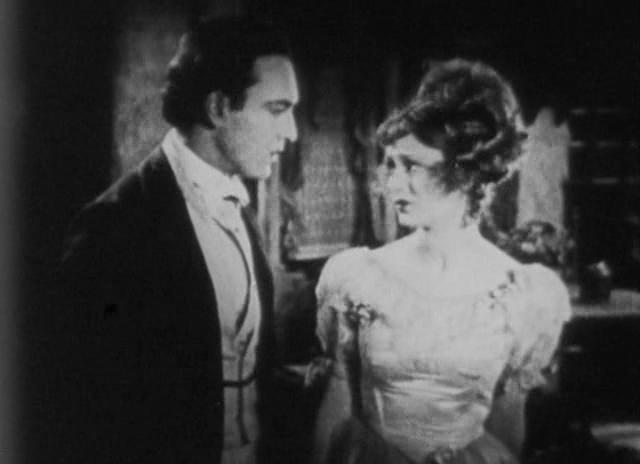 |
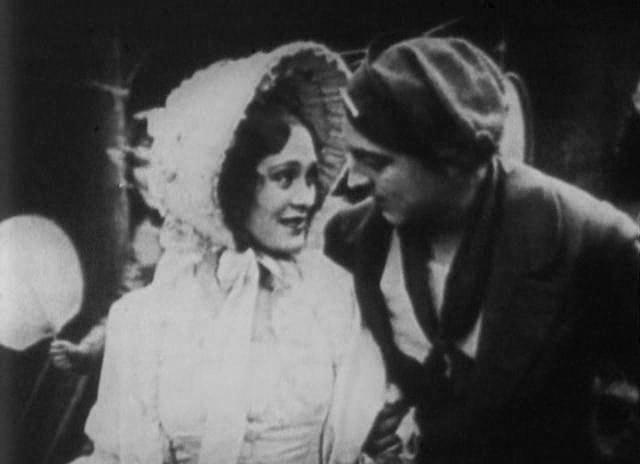
Second and third billed are Dolores Costello and George O’Hara, as characters who aren’t in the book. Costello plays Esther Harper, Ahab’s fiancée and the daughter of a missionary. It’s hardly a perfect relationship because they get about a day a year together when Ahab’s ship docks in Port Louis on the island of Mauritius. O’Hara is Derek Ceeley, that half brother, who covets Esther for himself and uses underhand tricks to separate her and Ahab.
I get that moviegoers in 1926 were probably happy with a romance getting shoved into an old classic. After all, two hours plus of Captain Ahab obsessing about a whale would likely feel about an hour and a half too much. However, this romance takes over the film so completely that there’s more whale in the poster art than than there is in the movie.
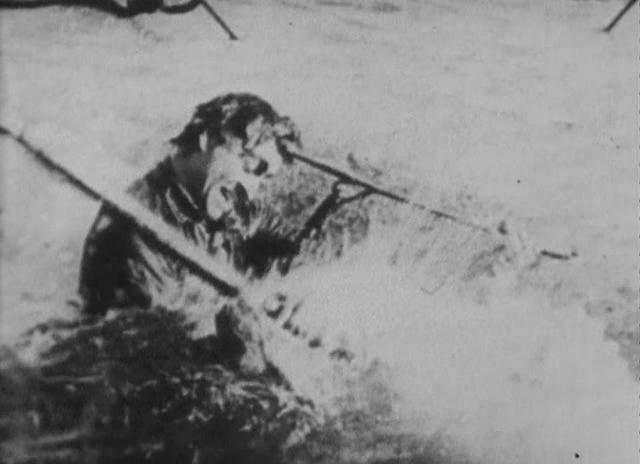
The first hint comes just over half an hour in when the soundtrack turns electronica and Ahab loses a leg to the monstrous whale. What counts as action, though, is eager whalers with readied harpoons ploughing through waves to reach the whale, not the fight when they make it close enough to let loose. And then it’s gone again, replaced by Ahab wondering if Esther’s still going to like him with a peg leg.
 |
The second waits until an hour and twenty-two minutes, at which point we move forward three years in a blink and join the actual story as it’s written in Melville’s novel. Now, Ahab is a captain, of the Pequod no less, and he has one objective only: revenge against the behemoth that took his leg and, in doing so, his girl too.
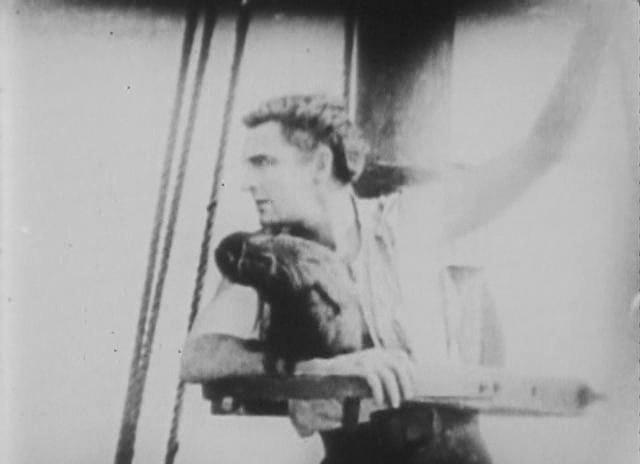
Early on, Barrymore plays Ahab as a bouncy star. He has his girl in port, he has his job on a whaler and isn’t it all grand adventure? He’s a swashbuckler, one excellent shot showing his descent down a rope, as seen from above. That was to leap over the side in Port Louis and into Esther’s waiting arms.
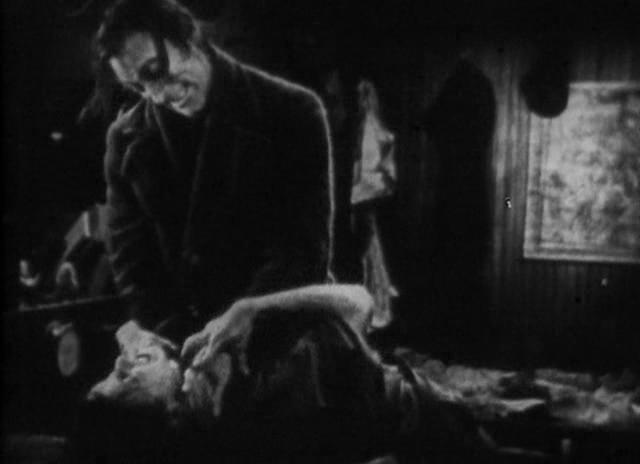
At this point, he’s clearly channeling earlier, darker roles, into a newly obsessive one, with hints of Edward Hyde and Fagin (he must have played him at some point), maybe even a little Sherlock Holmes, and, oddly, occasional bits of his brother Lionel. He’s easily the tour de force of the movie, no other actor given a role with enough substance to warrant much, but he is a powerful force on screen.
 |
Even here, with the actual story of Moby Dick finally in play, it really isn’t particularly close. I’ve reviewed two books this month with a line from Melville’s novel, the famous first line, of “Call me Ishmael.” Unfortunately we don’t get even that much here. Ishmael, the narrator of the book, isn’t in the movie.
Of course, Ahab and Moby Dick are, though there’s a heck of a lot more of the former than the latter. Even in the actual scenes with Moby Dick, I struggled to see much of him. I believe he was a puppet, but we can’t tell. It’s not too easy to even tell he’s a whale or indeed large.
Not one of the characters listed as “Ashore” on the Wikipedia page is in the movie, though a whole bunch of others, not in the book, are. We spend far too much time ashore, as far as I’m concerned, and most of that is absorbed by melodrama that weighs the film down rather than perking it up, which was likely the goal.
 |
None of the three mates—Starbuck, Stubb or Flash—is in the film either, as far as I can see, though a few of the wild harpooners are, even though I don’t believe the few who get a name get the right one. Most are just anonymous.
South Seas cannibal Queequeg is easily the most recognisable in Sam Baker, an imposing black actor who debuted here. IMDb tells me that Fedallah, of Indian descent in the book, is the character played by So-Jin, unmistakably east Asian, though Ahab bizarrely calls him by the actor’s name instead. Both do good work.
The only character, other than Ahab, to be named appropriately and given decent screen time, is Pip, though he’s changed considerably. For a start, he’s African American in the novel but white in the movie. Also, I think he’s been merged with the steward Dough-Boy, because he’s considered a halfwit here, when he wasn’t in the book. He becomes the keeper of a great secret and the story reaches its head when he finally tells Ahab.
 |
It seems a bit weird to avoid spoilers, given that I’m celebrating The Sea-Beast’s centennial and it was theoretically based on a novel that was already seventy-five years old at the time, but Bess Meredyth’s script changes everything even at the end. Let’s just say that there isn’t a happy ending in the book, but an outrageously convenient one here. Maybe that explains why a narrator like Ishmael isn’t needed.
I’ll grant that this may be a better film than it seems right now, with all its nuance blurred away. Surely, though, it can’t be by much.


 Posts
Posts


No comments:
Post a Comment